Learn why many modern bathroom renovations use Schluter and Hydro-Blok
waterproofing systems instead of traditional shower pan liners and mortar beds for better long-
term performance.
Why We Don't Build Custom Showers with Traditional Pan Liners Anymore
How modern waterproofing systems like Schluter® and Hydro-Blok® are changing bathroom construction.
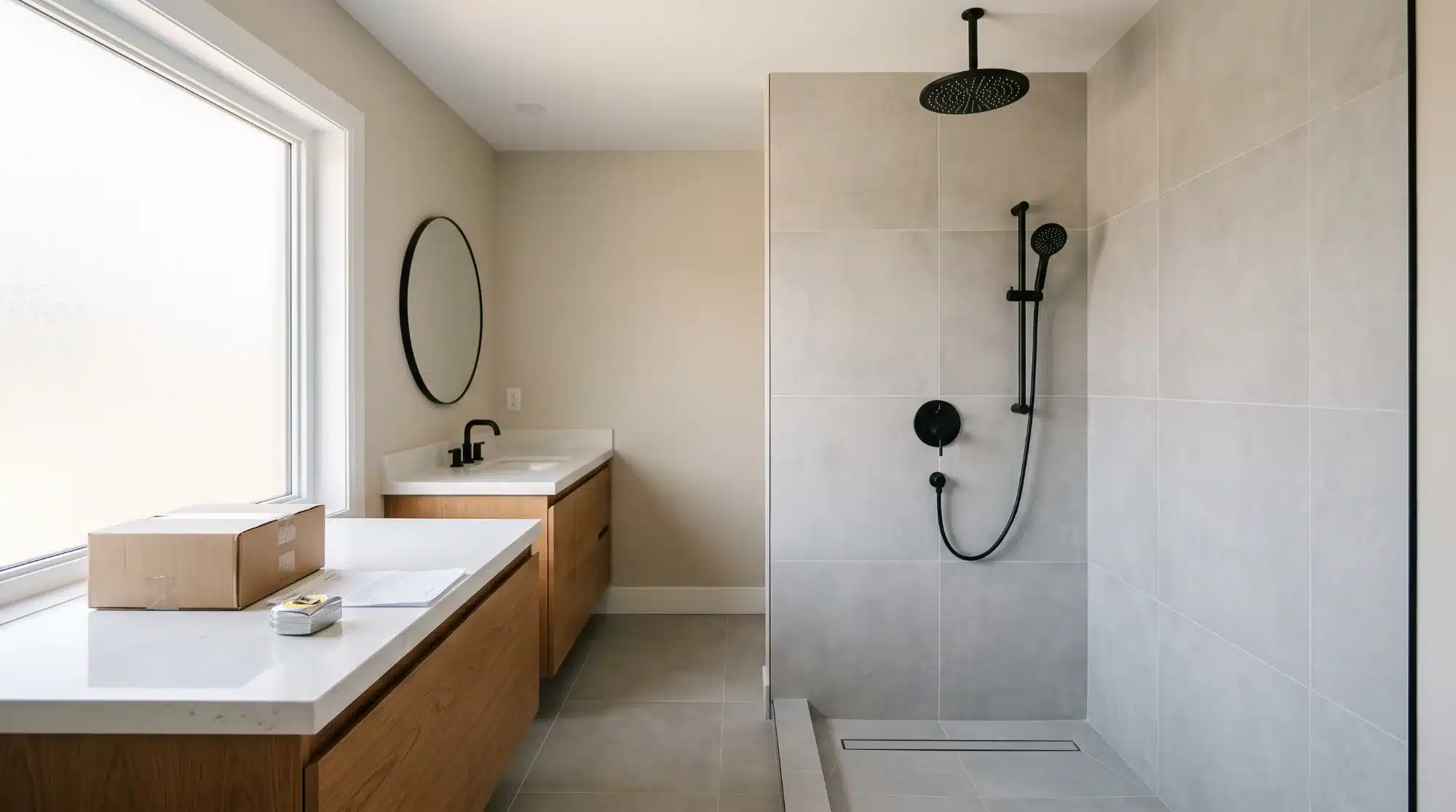
A custom tile shower is one of the most expensive features in a bathroom renovation.
Homeowners often spend $10,000 to $30,000 or more expecting decades of trouble-free performance.
Unfortunately, many custom showers begin developing problems long before homeowners expect. We’ve inspected showers that required complete replacement after just 6 to 10 years due to hidden water damage, mould growth, and deteriorated mortar beds.
At ER Plumbing & Heating, we’ve made a conscious decision to embrace modern waterproofing technology because we believe today’s homeowners deserve better.
How Traditional Shower Pan Liners Work
For decades, custom showers were built using a PVC or CPE pan liner installed beneath a dry-
pack mortar bed.
A typical assembly includes:
• A sloped sub-base
• PVC or CPE shower liner
• Drain assembly with weep holes
• Thick dry-pack mortar bed
• Tile and grout
Tile and grout are not waterproof. Water naturally passes through grout joints and many tile
installations during normal shower use. The pan liner’s job is to catch that water after it has
travelled through the mortar bed.
The Hidden Problem
Every time you shower, moisture enters the mortar bed. If everything is installed perfectly, that
moisture slowly drains toward the weep holes. However, blocked weep holes, poor slopes,
improperly folded corners, misplaced fasteners, or constantly saturated mortar beds can lead to
mould, mildew, musty odours, bacterial growth, efflorescence, and premature shower failure.
Why Modern Waterproofing Systems Are Better
Products like Schluter® and Hydro-Blok® place the waterproofing layer directly beneath the tile
rather than underneath a thick mortar bed. Modern systems typically include factory-made pre-
sloped shower bases, integrated waterproof wall panels or membranes, engineered drains, and
fully waterproof seams and corners. Because water never saturates the structural components,
these systems dry much faster between uses.
Why We Prefer Pre-Sloped Shower Bases
A traditional dry-pack shower depends heavily on installer craftsmanship. Factory-manufactured
shower bases provide consistent drainage, accurate slopes, integrated waterproofing, reduced
installation variables, faster installation, and improved long-term reliability.
Building for the Future
Traditional pan liner systems can still perform well when built exactly to specification. However,
modern bonded waterproofing systems offer significant advantages in moisture management,
drying performance, and long-term durability, making them the preferred choice for many
custom residential showers.
The ER Plumbing & Heating Difference
Every bathroom renovation is an investment. At ER Plumbing & Heating, we recommend
complete waterproofing systems from trusted manufacturers such as Schluter® and Hydro-Blok®
because we believe your shower should still be performing beautifully decades from now.
If you’re planning a custom bathroom renovation in Windsor or Essex County, we’d be happy to
explain the differences between traditional shower construction and modern waterproofing
systems so you can make an informed decision.